Twin Peaks: The Return – (I Promise…) The Final Word (2 of 4)

“Well, as promised, the second in my posting of articles regarding Twin Peaks: The Return. This comes from waggish.org and is used to thanks. A long read but it is simply stunning. Do NOT read unless you are happy to see major (Briggs) spoilers.
I was expecting The Return to wrap up with a bit more closure than it appeared to. Even though I was sure the end result would be closer to Inland Empire than the original show, I thought Frost’s presence as well as the sheer task of shaping 18 hours of material would require some sort of narrative arc simply to serve as an organizing principle. And it certainly seemed that way until the elliptical and incredibly desolate final episode, which I found viscerally disturbing like nothing else in Lynch’s oeuvre. (Even the three films of his I love, Eraserhead, Mulholland Dr & Inland Empire don’t move me like that final episode did; they’re more enveloping aesthetic experiences than emotional ones.)
The creation of the all-encompassing sense of dread in the absence of any clear rationale or narrative is an awesome achievement. It’s so powerful, particularly the “love” scene between Cooper and Diane, that it demands some attempt at an explanation. This is my best surmise of the kind of submerged material Lynch built episode 18 on top of. My account was inspired by this poster’s key observation that the alternate world of episode 18 was created not by negative entity Judy, but by the White Lodge itself as a trap for Judy. It was the first explanation that began to hint at a reason for the peculiar, overwhelming pathos of the final episode, including the uncanny and unsettling sex scene between Cooper and Diane.
A few things to keep in mind:
- Neither the Doppelganger nor BOB is the primary antagonist of the season. Judy is.
- Judy is or is represented by the Experiment monster, the Mother, horned bug symbols (Jeffries says as much), the Jumping Man, the Chalfonts/Tremonds, and Sarah Palmer.
- Gordon Cole, Garland Briggs, and Cooper have had some kind of longstanding plan to deal with Judy, in partnership with Phillip Jeffries and MIKE.
- Twin Peaks: The Return has a symmetrical structure. For example, Cooper enters catatonic Dougie-state 2.5 hours in and wakes up with 2.5 hours to go.
- Black Lodge creatures, including Judy, are attracted to pain and sorrow, a.k.a. garmonbozia, and consume it.
- Electricity is a fundamental energy, like fire.
Here is my best guess at the plan to deal with Judy, and the terrible costs associated with it. None of this is meant to be definitive, just an approximation of something I find compelling, and perhaps an approximation of what Frost in particular had in mind before Lynch started improvising over it.
The Fireman tells Cooper in the very first scene, “It is in our house now.” The “it” is Judy and her Black Lodge denizens. The Fireman is never more serious than he is here. This is a very, very bad thing, requiring desperate measures. He then gives Cooper three reminders: 430 [miles to the crossover into the alternate reality], Richard and Linda [Cooper and Diane’s alter egos], and “Two birds with one stone” [Cooper’s plan]. The timing of this scene is ambiguous. It may take place after Cooper electrocutes himself back into sentience in episode 15, but it’s more important that Cooper remembers it after that point, and knows what he has to do.
The trap has three key elements:
- The Cage: a pocket dreamworld created by the White Lodge, containing Odessa, Texas and Twin Peaks
- The Lure: Cooper and Diane
- The Bomb: Laura Palmer
With Phillip Jeffries as travel agent, Cooper goes back in time to rescue Laura Palmer on the night of her death. He tells her, “We’re going home,” in a funny and not terribly reassuring tone of voice. If “home” means the home of her parents, it is about the last place Laura would want to go. In fact, “home” is the White Lodge, where Laura originated in episode 8. Cooper takes Laura to the Jackrabbit’s Palace White Lodge grove. The sound the Fireman played for Cooper is heard just as Laura Palmer disappears, screaming as she does. This signals that the White Lodge has picked her up. Cooper is not especially surprised at her disappearance. He looks up because she has been pulled up as she was from the Red Room in episode 2 (with the same fluttering noise). UP is the direction to the White Lodge.
Sarah, acting under the influence of Judy, is infuriated by Laura’s disappearance and tries to smash her picture, but the scene keeps rewinding and the picture is invulnerable. This reality is becoming the “unofficial version” and Laura is “saved.”
The White Lodge does “save” Laura from death at her father’s hands, but that’s not Cooper’s purpose, which is why he seems increasingly dour after leaving the sheriff’s station. Laura is being put to use in the trap for the greater good, but not for her own good. She has still suffered a terrible childhood and adolescence full of abuse. In Fire Walk With Me, Cooper told Laura not to take the owl cave ring because Cooper’s plan requires Laura alive. When Leland/BOB killed Laura, it messed up the plan.
If Cooper were primarily concerned with truly saving Laura, why didn’t he rescue her from the past years before the night of her death, in order to spare her so much terrible abuse? Ironically, the tragedy of Laura Palmer is that no one wanted her to die, yet everyone caused her to suffer—the revelation of episode 18 is that her tormentors now include Cooper among them. In The Return, “Who killed Laura Palmer?” ultimately becomes the MacGuffin Lynch and Frost originally intended it to be. The question “Who killed Laura Palmer?” led both characters and viewers astray, distracting from the more important and more compassionate question, “Who—or what—is Laura Palmer?”
The White Lodge deposits 1989 Laura into a pocket dreamworld, which I’ll just call the Cage. We already saw the White Lodge use a cage to contain Mr. C briefly; that is a hint as to the nature of this dreamworld. It shapes itself around her. Laura then stays in the Cage for 25 years, living out a mostly uneventful life as Carrie Page in Odessa, Texas.
Laura’s subsequent life as Carrie Page appears to have been better than her childhood, judging by what little we learn of her, but there is still a dead body in her living room when Cooper shows up. The Cage is, perhaps, Laura’s dream of the life she hoped to have if she could escape her childhood. By entering the Cage, she forgets much of what happened prior to entering it.
The Cage is not Judy’s domain. It is a White Lodge creation given shape by Laura’s own dreams. The jackrabbit is the symbol of Odessa. The Fireman knew of the Cage by the time Andy took his trip into the White Lodge: he showed Andy a picture of the #6 pylon outside Carrie Page’s house. The Fireman is conscious of the plan and an accomplice to it.
“Laura is the one,” but why? When the Fireman sent the golden Laura orb down to Earth in response to the Trinity nuclear test, I and others worried that this might change Laura from a fully human survivor of abuse into some sort of magical chosen one, dampening the human element of the show. I now think that Laura is special, but she is special because of her pain. Laura lives through a horrendously dark youth. The psychic residue left by her abuse at the hands of her father and BOB is so tremendous that Judy makes the Palmer house her base of operations, either inhabiting or possessing Sarah Palmer. BOB was a garmonbozia glutton, and Laura was an everlasting gobstopper of garmonbozia, until she died (an outcome which BOB/Leland did not want). The Black Lodge consumes garmonbozia, but cannot generate it independently.
Why would the Fireman, portrayed as a positive figure, create such a martyr figure? I suggest that Laura Palmer was meant to function as a capacitor: storing a huge accumulated charge of suffering which could then be discharged at the precise moment. Laura’s immense suffering does not make her superhuman, but it makes her uniquely capable of serving a purpose in the Trap. In the right setting, this discharge could overload the circuits of a Lodge entity and destroy it altogether. To use another apt analogy, it would be like an atomic bomb reaching critical mass. But with fissionable material as substantial as Judy, you would not want to detonate it in our universe, or else it would take most of our world with it.
In the language of Hawk’s map:
- Laura is the highly-concentrated pure corn (of fertility) that becomes diseased black corn (garmonbozia) through suffering.
- Black Lodge beings consume garmonbozia to generate black fire/electricity (which smells like scorched engine oil).
- Judy is the powerful mother of corrupted fertility, capable of consuming unearthly amounts of garmonbozia to feed her immense black flame.
- Given sufficient black corn (i.e., fuel), the black fire will grow, consume everything, and burn itself out, like pouring gasoline on a fire. Or an electrical circuit overloading. Or an atomic bomb reaching critical mass.
Gold is the color of garmonbozia, and of Laura’s orb. As generated by the Fireman, she is super-infused with corn—she is highly potent fuel. But Judy will not feed on good, healthy corn. Only black corn will do. Leland and BOB had to take care of that corruption. When the Fireman freezes the picture on the shot of the BOB orb emerging from Judy, it is not because he sees BOB as the central threat (though at this point in the series, the viewer is supposed to think so). It’s because BOB is unwittingly part of the plan to defeat Judy.
Meanwhile, 25 years later, in the regular universe: the Fireman diverts Mr. C from Sarah’s house (Twin Peaks’ most negative location) to the sheriff’s station (Twin Peaks’ most positive location). Mr. C sought garmonbozia and so was drawn to Sarah Palmer, but he was being set up by Jeffries and Briggs all along. His plotline isn’t crucial to the Trap, which is why his defeat came so easily with the aid of a hastily-recruited English kid with a superpowered glove. He did some damage, but Cooper-as-Dougie was untouchable due to White Lodge management. Mr. C kept BOB fed with garmonbozia after Laura’s death, but that danger was fairly minimal compared to the apocalyptic threat posed by Judy, so that Mr. C didn’t even show up on Gordon and Albert’s radar until 2016, and Gordon is fairly indifferent when Mr. C escapes from prison. (Given Ray’s status as an informant and Gordon’s connections to Phillip Jeffries, it is easily possible Gordon was in on the escape plan.) Gordon is rather Machiavellian and callous when it comes to the suffering of others. He may have gone soft on Diane’s tulpa, but he’s not soft where it counts. The anger Diane’s tulpa felt toward Gordon and the FBI is real and justified. She’s being used by them.
When the clock locks on 2:53, it signals the completion of this world’s story, which will soon become the “unofficial version.” As the Log Lady said, “The glow is dying…the circle is almost complete.” 2 + 5 + 3 = 10, “the number of completion.” Diane and Cooper, who have both traveled outside of this story, move on to the final act along with Gordon, who possesses some sort of special powers himself.
In between leaving the sheriff’s station and going to the basement of the Great Northern, Cooper, Gordon, and Diane formulate the solution to a problem with the plan. (Gordon also gives Cooper a replacement FBI pin.) Part of the plan, which involves rescuing Laura from the past, is still fine. The problem is that after being deposited in the Cage in 1989, Laura makes poor bait, because once in the Cage, she forgets her childhood, and so Judy is not lured into the Cage. That task falls to Cooper and Diane. Cooper, having already made use of Laura in the Trap, is also going to sacrifice himself and Diane to it.
Cooper takes another trip through the Red Room, similar but different from the path he took in episode two. He has crossed over into the new “official version.” The doppelgangers are gone, because they were not created in this version. More subtly, Laura is missing from the initial “Is it future or is it past?” scene with MIKE. The camera focuses on the empty chair where Laura sat in the first iteration. When we do see Laura, after Cooper speaks to the Arm, it is in fact Cooper’s memory of the first trip. We don’t see Cooper sit down or stand up, and the whole scene is abbreviated. The Laura Red Room scene in episode 18 is a flashback prompted by the Arm, to remind Cooper of his mission. Laura herself is sealed off in the Cage, and has been for many years.”
Coming Soon: Coop exits Glastonbury Grove. Part 2 of this wonderful article in ‘The Final Word, Part 3 of 4″, if you follow me!!!!! Wow BOB Wow!!!!!!!!!!!!!!!!!!!!!!!!
Spotlight On… Louise Brooks

In her day, Louise Brooks was never considered a major star. And her career, relatively speaking, was brief. The actress appeared in only 24 films between 1925 and 1938 — a period spanning 13 years, four of which she was absent from the screen. By comparison, her celebrated contemporary Clara Bow (the “It” girl) appeared in 57 films over 11 years, while another contemporary, silent era star Colleen Moore, appeared in 48 films over 18 years. Of Brooks’ 24 films, she received top billing in only three productions. Notably, these were the three films she made in Europe. In the United States, Brooks was usually given second or third billing. In only one of them, Rolled Stockings, was she considered the lead — though just as often, this 1927 film was promoted as starring not Brooks, but the Paramount junior stars.
As film historians have pointed out, few actors have attained such a large reputation through so few films. Today, Brooks’ remarkable popularity rests on her iconic look — while her cinematic renown comes largely from her role as Lulu in the once derided, now acclaimed German silent, Pandora’s Box. That film, often ranked among the greatest of its time, was largely forgotten until its rediscovery in the 1950s. Since then, and especially in the last few decades, Brooks’ other surviving films have been reevaluated, and her reputation as an actress has grown significantly.
Brooks made her screen debut in 1925, playing a moll in an uncredited role in Herbert Brenon’s The Street of Forgotten Men. Under contract to Paramount, she was soon playing the female lead in a string of light dramas and comedies with titles like A Social Celebrity and Love Em and Leave Em. The best of her early films may be The Show-Off, which was based on an acclaimed stage play by the Pulitzer Prize winner George Kelly. Generally speaking, Brooks received good reviews for her screen work as she appeared alongside such major names as Adolphe Menjou, Evelyn Brent, Richard Arlen, and Dorothy Mackaill. Also among her co-stars was the legendary W.C. Fields, who Brooks played opposite in It’s the Old Army Game, a film directed by the actress’ future husband, Eddie Sutherland.
In 1927 and 1928, Brooks was cast in more dramatic roles, including The City Gone Wild, an early gangster film directed by James Cruze. Two other important works from this time include the Howard Hawks directed A Girl in Every Port, which starred Victor McLaglen, and the William Wellman directed Beggars of Life, which was based on a celebrated book by Jim Tully and starred future Oscar-winner Wallace Beery. These two films are considered the actress’ most significant American movies, while Beggars of Life is widely considered her single best American film. Of her early silents, five are considered lost. Two others, including Just Another Blonde from 1926 and Now We’re in the Air from 1927, are partially lost, and survive only in fragmentary form.
Brooks’ career pivoted around The Canary Murder Case. She was given the title role in the 1929 film, a murder mystery based on the popular novel by S.S. van Dine which starred William Powell as detective Philo Vance. The film, an important Paramount production, was first shot as a silent. However, by the time the decision was made to adapt it to sound — which would require Brooks to dub her role, the actress had left for Europe. Paramount was displeased, to say the least, especially since Brooks wouldn’t renew her contract with the studio after being refused a modest raise. When The Canary Murder Case was eventually released, critics commented on the somewhat poor quality of Brooks’ voice, which only some speculated had been dubbed by another. The talk around Hollywood was that Brooks’ voice didn’t record well, and the gossip was that the actress was difficult to work with.
Today, Brooks is best known for the three films she made in Europe, Die Büchse der Pandora (Pandora’s Box) and Tagebuch einer Verlorenen (Diary of a Lost Girl) in Germany, and Prix de beauté (Beauty Prize) in France. They form a kind of trilogy, and mark the highpoint in Brooks acting and career. Both Pandora’s Box (1929) and Diary of a Lost Girl (1929) were directed by G.W. Pabst, one of the great European directors of the inter-war era; Pabst, along with the great French director René Clair, co-authored the story behind Prix de beauté (1930), an international production which ended up being helmed by an Italian, Augusto Genini.
When Brooks returned to Hollywood, few noticed. “Nobody burned more bridges than Louise Brooks,” biographer Barry Paris wrote, “or left prettier blazes on two continents.” The actress’ career quickly went into decline. Brooks felt she had been blackballed after refusing to return to work on The Canary Murder Case. It may well be so. She also proved her own worst enemy by turning down important roles in films like The Public Enemy (1931) which might have restarted her career.
In need of work and still hoping for a come-back, Brooks accepted small roles and bit parts in indifferent films throughout the 1930s. One low point came in Windy Riley Goes Hollywood, a short directed by the legendary Roscoe “Fatty” Arbuckle, who was then working under a pseudonym and living through his own internal exile from Hollywood. The best of Brooks’ sound films is God’s Gift to Women, a pre-code farce directed by Michael Curtiz in which Brooks plays only a supporting role. Her character in King of Gamblers, a terrific crime film directed by Robert Florey, ended up on the cutting-room floor. The actress’ last screen credit came in 1938 with Overland Stage Raiders, a middling B-Western starring a young John Wayne.
Of Brooks 24 movies, 15 were released as silents. Three were released during the period when the industry was transitioning from silent to sound films: Beggars of Life was released as a silent film as well as a sound film with sound effects and a musical score; the sound version, unfortunately, is lost. Two others, The Canary Murder Case and Prix de beauté, were released simultaneously in both silent and sound versions. Brooks’ seven final films, made during the 1930s, were what were at first called “talkies”. One of her last was a musical, the Grace Moore vehicle When You’re in Love. Brooks had an uncreditted role in the film as a chorus dancer, and it’s nearly impossible to spot her.
If you want to see what the fuss is all about, or wish to watch just one or two films, start with Pandora’s Box. Some find it tough going, and its theme dark. Nevertheless, it is a tour-de-force and Brooks is sensational. Also a masterpiece in its own right and just as highly recommended is Diary of a Lost Girl. Otherwise, an excellent overview of Brooks’ movie career can be found in the Emmy-nominated documentary, Louise Brooks: Looking for Lulu. It is well worth checking out. It is also a thoughtful introduction to Brooks’ life, and with its many clips, it serves as a sampler of Brooks’ work before the camera.
The titles listed below link to informational pages which include a story synopsis, cast and credits, production history, trivia, etc…. (Dates given represent the year of release, not the year of production, which is sometimes different.) Titles marked with an * are considered lost (meaning the film is thought to no longer exist). Titles in bold are or have been available for home viewing in some format (VHS, LaserDisc, DVD, or Blu-ray). Occasionally, Brooks’ films are screened in theaters, especially those which show classic movies, or at the many film festivals held all around the world. Over the years, a few have even been shown on television in the United States, Europe, and Australia. (Poor quality copies of a few films can also be found online; but don’t ruin it for yourself; if you have the chance, go see one of her films on the BIG screen, or track down a DVD, each of which makes for a far more enjoyable experience!) A few of Brooks’ available films can also be borrowed from public libraries. (Many thanks to pandorasbox.com)
The Street of Forgotten Men (1925)
The American Venus (1926) *
A Social Celebrity (1926) *
It’s the Old Army Game (1926)
The Show-Off (1926)
Just Another Blonde (1926) – survives incomplete
Love ‘Em and Leave ‘Em (1926)
Evening Clothes (1927) *
Rolled Stockings (1927) *
Now We’re in the Air (1927) – survives incomplete
The City Gone Wild (1927) *
A Girl in Every Port (1928)
Beggars of Life (1928)
The Canary Murder Case (1929)
Pandora’s Box (1929)
Diary of a Lost Girl (1929)
Prix de Beauté (1930)
Windy Riley Goes Hollywood (1931) – short film
It Pays to Advertise (1931)
God’s Gift to Women (1931)
Empty Saddles (1936)
King of Gamblers (1937) – scenes deleted
When You’re in Love (1937)
Overland Stage Raiders (1938)
We’re Back!!! Coming Soon – Spotlight On… Louise Brooks

After a very long time away and some false re-starts, we are back. Look out for updates at least once a week, including film reviews and news and specialist articles and varying subjects. Feel free to get involved in the comments section of any posts.
The 1000 Returns Soon – Spotlight On… Robin Williams

After a brief sabbatical, the 1000 Films to Watch blog will make a return. Beginning with the second entry into our ‘Spotlight On…’ series: the late great Robin Williams. Look out for this soon, alongside regular updates. Do feel free to get in touch.
Twin Peaks: The Return – (I Promise…) The Final Word (1 of 4?)

Yes, I know, this is really just a blog about Twin Peaks now but it is my passion. There is so much to say from me and some other great articles. I will do a post on my views but here is a great one about just how hard it has been to see all of the Peaks canon, especially the pilot – which was not available to buy in a proper version until 2007! Spoilers ahead, the article is called ‘A history of Twin Peaks on Home Video’ from dugba.com. Used with thanks. This is from 2008.
‘A few months back, sitting at a bar in Silverlake, I found myself talking to a guy who had worked on the Twin Peaks Definitive Gold Box DVD Set. During our conversation, he said to me that Twin Peaks Fans are some of the most critical and demanding fans that he had ever encountered. I told him there was a reason for that. As I felt a long rant coming on, the words that came out of my mouth were “Home Video of the past has left Twin Peaks Fans bruised and abused.” He gave me an awkward look and probably figured I was a total freak. Just then the bar maid took our order, he grabbed his glass and walked away.
I never got my chance to explain. Even so, it probably wasn’t the time or place as we were rejoicing over the amazing work that had been done on the Twin Peaks Gold Box Set. Alas, tonight, after a few failed attempts to complete what was supposed to be a review of the new Twin Peaks Gold Box DVD set, I’m finally able to try and explain my veiled statement and hopefully explain why it now after years of frustration, it is simply history that has been rectified by a magnificant release.
More than any TV show that I can think of, Twin Peaks has had one of the worst treatment in terms of Home Video releases than any other TV show property in existence. Period. It all started back in 1991. Warner Bros. first released the International version of the Twin Peaks Pilot on VHS with an extended ending. Back before the days of retail priced VHS, the Pilot originally was steeply priced for rental at $79.95. True, it was the Pilot, and you could rent it for a buck or two, but if you wanted to be the first in line to own it, you would have to shell out some serious cash. In addition, fans wishing to use it as a starting point on their journey to the world of Twin Peaks would be ultimately confused as the version released on VHS featured the closed “International” ending. More on that later.
Following this release, Worldvision released the Season One boxed set, containing the first seven episodes of Twin Peaks on VHS for a retail price of $99.95. The box art was atrocious, designed to look like a log. It’s only saving grace was each of the Episodes were recorded in SP mode. Notably missing was the Pilot Episode. You see, Twin Peaks since the early days was plagued with rights issues as Warner Bros. held the US distribution rights to the Pilot and Worldvision held the distribution rights to the rest of the series (Episodes 1-29) minus the Pilot. So now you’ve arrived home and are ready to view the Pilot and Season One back to back. Well, low and behold, by the end of the Pilot, you were left scratching your head. Since Warner Bros. only released the International version (also known as the Euro-version) of the Pilot, the mystery of who killed Laura Palmer is solved in the last 15 minutes of the extended ending. So as a viewer, and especially a first time viewer, going from the Warner Bros. VHS of the International Pilot straight into the Worldvision “Log Box” in an attempt to recreate what it would be like watching the Series as it aired on TV would take a bit of planning. Back in the old days for those of you that Usenet groups, particularly the alt.tv.twin-peaks group, which was like we now know as modern Twin Peaks discussion forums only back then it was without the fancy pictures, private messages, hell, even web browsers weren’t out back then. All you had was blocks of text with messages from fans, and Twin Peaks FAQ’s where you could find some kind soul that diligently posted detailed directions, down to the time code, of where and when to hit the stop button on your VCR when watching the Euro Pilot just so you could pick up and begin watching the Season One VHS box set just as it was first seen on TV. A far cry from seamless but it was the only way to go at the time.
Later in 1991, Twin Peaks Season One Episodes 1-7 were released on laserdisc by Image Entertainment. While the release on laserdisc was the best quality that you could get at that time, the price per each box retailed for $124.95. Of course, the laserdisc sets didn’t all come out at one time. Volume 2 on laserdisc consisting of Episodes 8-14 were released in 1993 again at a retail price of $124.95. A year later, Volume 3 was released on laserdisc consisting of Episodes 15-22 streeting for that same retail price of $124.95. Finally if you weren’t broke by then, you were again plunking another $124.95 for Volume 4 which was released later that year consisting of Episodes 23-29. So if you were a big fan and wanted to have the cleanest, crispest version of Twin Peaks on laserdisc, you would have to throw down roughly $500 retail over a three year period. Of course again, this did not include the Warner Bros. Euro Pilot which also received a laserdisc released for an additional $34.95. But wait.. There’s more. Of course there’s more.
In 1993, Worldvision released another Twin Peaks VHS Box set; retailing for the price of $99.95 only this time containing all 29 Episodes of the Twin Peaks TV Series on 6 tapes. Once again, minus the pilot. A portion of the original run of this 6 Tape VHS set was found to be defective as many reported issues with tape one jumping from episode 5 to episode 8 (season 2 premiere). Imagine how confusing it would have been to someone NEW to the series, wondering what all the fuss was about–going from the discovery of Jacque’s apartment to Cooper laying shot on the floor! Later runs of the VHS set were corrected. Each of the 6 VHS tapes were recorded in EP (slow) mode. While it was great to finally see the Second Season on VHS, anyone that owned this set can attest to what a piece of sh*t it was. The box art was equally as bad but the special thing about this set was that it included a “hidden bonus feature”. The video quality was already very poor and the more often you played the tapes, the worse the picture would get. I swear to you that I’m not lying when I tell you that over the years and several viewings, the VHS tapes in this box set degraded so much that the color of the video started to deteriorate into a muddy orange hue. And that wasn’t all. The audio began to fade in and out almost as if you were listening to it outdoors while swinging on a swing set.
The Worst Transfer to Laserdisc in History. Entertainment released a laserdisc version of Twin Peaks: Fire Walk With Me. Sad story to tell on this one. This was around the same time when the studios were really pushing widescreen transfers on laserdisc to help sell the format as being the format to bring the theater to your home. While this was a great way to finally see some of your favorite films in their original aspect ratios, if you ever owned this laserdisc, you will know that the laserdisc transfer of Twin Peaks: Fire Walk With Me was done by the blind. Instead of doing a proper transfer of the original aspect ratio of 1.85:1, they decided to take the 4:3 VHS transfer and slap black bars on the top and bottom, most notably cutting off the tops of the heads of Leland Palmer in the Red Room and Laura’s Angel. Retail price for Twin Peaks: Fire Walk With Me on laserdisc was another $34.99. Geesh! So for all the Twin Peaks completists, to get it all on laserdisc at the time, it would have cost you $569.94 plus tax for the entire set… and this was back in the early 90’s!
Oh, and mind you, they never told you that after investing your hard earned cash on a set of every Twin Peaks Episode and film on laserdisc, the set would only last you about 5-7 years, as many of these same laserdiscs would get infected by something known as laser rot which is a term used for laserdiscs that over time due to inferior adhesives, suffered oxidation and resulted in loss of data, rendering the discs unplayable. I’m not even going to go there. But I will say that I did cry.
Finally, in early 2000, a few interesting things happened. With the advance in technology and a relatively new format known today as DVD, things started to heat up for Twin Peaks in the Home Video world. After moving around from distributor to distributor, Twin Peaks eventually landed at Artisan Entertainment. Finally a gleam of hope. At the VSDA (Video Software Association Show) in Las Vegas, Artisan announced that they had plans to release the entire Twin Peaks Series on DVD. In addition, New Line had made a similar announcement to release the Twin Peaks: Fire Walk With Me film on DVD and to the joy of fans worldwide, they would be releasing the DVD under their Platinum line of DVDs complete with an hours worth of Deleted Scenes supervised by David Lynch.
Fans were ecstatic and it looked as if justice would finally be served. Would 2000 finally be the year to end the suffering and angst that the Twin Peaks fans felt against the previous releases of Twin Peaks on Home Video? Not quite. Both titles were pushed back to 2001 for different reasons. While Artisan had acquired the rights to both Seasons of the Twin Peaks TV Series, they, like Worldvision, did not have the rights secured to include the TV version or any version of the Pilot. Artisan tried to work a deal out with the rights holders at the time, but in the end, they couldn’t make it work and opted to release the set without the Pilot. New Line who previously announced the long awaited Deleted Scenes could not resolve legal issues regarding the release of the Deleted Scenes to Fire Walk With Me and also opted to release their DVD without Deleted Scenes. The fans were devastated. Adding insult to injury, the overseas releases of the Twin Peaks Season One on DVD actually included the Pilot, making the US and Canada the only territories in the whole entire world that didn’t have the original TV Pilot released in the DVD box set.
Both Artisan and New Line hired Three Legged Cat productions to produce joint extras between the two sets which amounted to some basic interviews with the cast and crew. The interviews for the Artisan set were average at best, focusing more on the cast and crew’s personal views on Twin Peaks as a phenomenon without any real substance or feel for what Twin Peaks was all about. The documentary for the Twin Peaks: Fire Walk With Me DVD was a travesty. Horribly edited and done in an almost insulting fashion, the documentary was poorly received by the fans. Where both DVDs shined were in the beautiful video transfers done from the original film negative. Where the DVDs failed were in some of the awkward choices for the new 5.1 audio mixes and the omission of the original Dolby 2.0 tracks.
An original TV version of the Pilot (minus the extended Euro ending) surfaced late 2001. This release was done by the company, Catalyst Logic, a Taiwan based company who smartly decided to release their DVD without any region coding (NTSC Region 0) as an import. Early in its release, being the only Region 0 (playable in all DVD players) NTSC copy of the TV Pilot, this DVD hit Ebay with auctions selling for as much as $150. Sad to say, the video transfer was nowhere near as good as the transfers done by Artisan for their Season One set and only slightly better than the laserdisc. This DVD included an audio track that was horribly out of phase which made most of the scenes sound like they were recorded underwater. And before you ask, yes, I was one of the suckers who paid over a hundred dollars for this DVD. Cue up Scotty J. sample from Boogie Nights. Stupid Stupid Stupid.
So at least the first seven Episodes were out with crystal clear transfers. Surely the next set of Season Two on DVD would be right around the corner. Wouldn’t it?
Six Years Later… Cited as one of the longest gaps in DVD release history between Season sets, and due largely to expiration of rights and legal issues up the wazoo, the Second Season of Twin Peaks on DVD was released in April of 2007, this time by CBS DVD. When it finally was released, it was a great day. Luckily, the Second Season DVD release featured similar transfers from the original negative as well as new 5.1 sound mixes, this time, supervised by David Lynch himself. The Second Season on DVD also featured some great interviews which were done through Lipsynch Productions and produced by Adam Harding and Josh Eisenstadt. These interviews unlike the ones on the Artisan set were well planned out and interesting to watch hitting some of the questions that fans have been waiting years to hear answered. While it was great to finally see the Second Season on DVD, the release just didn’t live up to the hype. Waiting nearly 6 years for this release, the expectations of the fans were through the roof. Most fans, not privy to all the legal issues holding back this release had assumed that CBS DVD had spent the last 6 years working on the set rather than sorting through rights issues. Of course this was just the nature of the beast. I mean, what could CBS DVD do that would ever meet the high exceptions of these bruised and battered Twin Peaks Fans?
Like a heroic knight riding in on a white stallion, to save the day, arrives Ken Ross, head of CBS Home Entertainment and the driving force behind the Twin Peaks Gold Box DVD set which will go down in Twin Peaks history as the DVD that brought justice to Twin Peaks on Home Video. Ken was instrumental in doing what it took to bring to the fans a DVD set that would exceed fan expectations. His first great move was to hire DVD producer Charles de Lauzirika one of the finest DVD producers in the business. Together, the team worked closely with not only David Lynch, but the actual fans of the TV Series to come up with a plethora of rare never before seen extras that have been on Twin Peaks Fans wish lists for years. Let’s talk extras.
Twin Peaks Gold Box DVD A Slice of Lynch Documentary
This film is presented as a roundtable discussion featuring David Lynch, Kyle MacLachlan, Madchen Amick and Jonathan Wentworth. It’s a very warm piece that brings four longtime friends together to share their thoughts on Twin Peaks. This is the only segment that Lynch is featured in terms of interviews but it feels more like a short film rather than an interview segment. You can really tell that Twin Peaks was something special to Lynch and how saddened he was to be forced to reveal the identity of the killer in the Second Season.
Secrets from Another Place
Finally, a proper documentary done on Twin Peaks. This documentary is split into four parts. The first covering the Pilot, the second covering Season One, the third covering the Music, and the fourth exploring Season Two. The segment on the Pilot entitled “Northwest Passage: Creating the Pilot” gives a real good look at how Twin Peaks came to be. Mark Frost provides an almost narrative for the entire documentary giving details of the genesis of Twin Peaks. The best part of “Northwest Passage” is the use of some rare archive footage that was taken on the set. You actually get to see Lynch behind the camera and filming some of the scenes. Woven into the documentary are some great never before seen photos and magazine clips. The Season One segment, “‘Freshly Squeezed: Creating Season One” follows the phenomenon that was Twin Peaks and all that came with being in the spotlight worldwide. The Music segment “Where We’re From: Creating the Music” is a great segment on creating the music of Twin Peaks. Julee Cruise gives some interesting stories. Unfortunately, Angelo is caught telling that same stories he has told a dozen times before regarding the creation of the Twin Peaks Love Theme. I was hoping that he would talk about some of the other themes from the Series, but hey, that’s just me. Julee Cruise and her candid comments are what really seals this segment for me. The Season Two segment “Into the Night: Creating Season Two” hits you over the head hard. It doesn’t hold back on the cast and crew opinions regarding mistakes made on Season Two. Best of all, I applaud Charles de Lauzirika for having the balls to ask one of the questions that hardcore fans have wanted to know for years as to why on earth did they drop the whole Cooper/Audrey romance plotline in the Second Season? The responses are quite interesting. The one thing that is missing from this segment is coverage of the Season Two hiatus and the efforts by Lynch and Frost to Save Twin Peaks from being cancelled. I remember seeing Lynch, at the time, on the Tonight Show with Jay Leno pleading with fans to write letters to ABC in support of “Giving Peaks a Chance”. Viewed as a full feature, “Secrets from Another Place” is a great documentary that really gives a great look into the history of Twin Peaks.
Return to Twin Peaks
Having been to a few Twin Peaks Festivals myself, it was really nice to see the way this was presented. I was scared at first when I heard about the segment as these things can sometimes make hardcore fans look pretty bad. Luckily, this segment was done with the utmost respect and comes off as a really warm, heartfelt piece. I haven’t been to a Festival in a few years but after seeing this it reminded me why Twin Peaks fans are the best.
Deleted Scenes
This area was a touchy area for some. Having been screwed over by New Line on the Twin Peaks: Fire Walk With Me Deleted Scenes debacle of 2001, Deleted Scenes in general have been a sore spot for Twin Peaks Fans. I mean, who doesn’t want to see more vintage Twin Peaks material? Early rumors on the Gold Box Set went around the internet and many sites including my own were told that Deleted Scenes were just not going to happen. This perpetuated some negative press for the DVD set early on which was unfortunate. I have come to find out that Deleted footage to the Twin Peaks TV Series has been either lost, destroyed, or scattered to the wind. To make up for this CBS DVD with the help of Charles de Lauzirika found the only known source of Twin Peaks Deleted Scenes which come to us from an old VHS dailies DVD bootleg that has been making its rounds on the net. Lynch picked the best of what was on that DVD and allowed it to be released on this DVD set. The scene featuring Audrey, Johnny, Silvia, and Dr. Jacoby is absolutely priceless and gives you a rare glimpse of an alternate storyline that might have been.
Twin Peaks Publicity PhotoThe set also features Richard Beymer’s Twin Peaks photos including some rare never before released color photos from his collection, mostly centered on Episode 29. There are the Lucy Bumpers, a grip of commercials, production documents and stills, and even the 1-900 recordings.
The set also includes the SNL sketches featuring Kyle MacLachlan, the Falling Music Video, and the Japanese Georgia Coffee Commercials featuring the last time the Lynch, MacLachlan, and the rest of the crew were together to film anything related to Twin Peaks back in 1993.
Now if the above wasn’t reason alone to buy this new set, then you must be smoking something. But there’s more… much more…
This DVD set did something that being a hardcore fan, I have to say I really, truly appreciate. While the new audio mixes are great, there are subtle changes in the mixes when it gets translated to 5.1. The purist in me will always want to at least have the option of listening to the original sound mix in Dolby 2.0 Audio. Thankfully, it has been included. Just one more reason why this set outshines the all of the previous releases of Twin Peaks on DVD.
The DVD set also features all of the Log Lady intros including the Log Lady Intro for the Pilot which wasn’t even released with the overseas Season One DVD sets. In addition, for you hardcore fanboys that were upset that Artisan altered Episode 7 to add the Twin Peaks sign after Cooper gets shot, well, rest assured, that sign has been removed. Although I was surprised that the “To be continued” title shot was not added back in, but maybe it wasn’t part of the original negative.
Still want to hear more…
Well, this set comes with the Pilot which has never been officially released in the US on DVD or with the original TV ending. It also features the International version via seamless branching which is great to watch. For first time Twin Peaks Fans, I would recommend not watching the International version for your first time around. Wait until after you’ve finished the Series. The only time I have ever seen the Pilot look this good was at the 2002 Twin Peaks Festival when it screened at the Seattle Art Museum.
So do I have any gripes with the DVD? My only complaints are that it would have been nice to feature the “Previously on Twin Peaks” and “Next on Twin Peaks” segments. Granted, most of those segments weren’t that great, but do help if you are watching the set over a period of several weeks. It would have been great if they would have found the Deleted Scenes to the TV Series. It’s heartbreaking to think that they may have been destroyed but CBS DVD did do the best they could have with what they had. So am I happy with this release? Absolutely. Not a single Lynch DVD comes close to the outstanding quality exhibited in this set. This is the best Lynch DVD release ever. New fans to Twin Peaks, you really don’t know how good you have it. I think that the single most important thing about this new release is the fact that Twin Peaks the ENTIRE SERIES is now beautifully remastered and made available to a brand new generation of fans to enjoy and explore.
CBS DVD and Charles de Lauzirika have done something that I didn’t think could be done. They have healed the wounds of past Twin Peaks Home Video debacles. I only hope that Charles de Lauzirika gets a crack at doing a proper Twin Peaks: Fire Walk With Me DVD and even better would be if CBS DVD were the studio to make it happen. After all, they do own the distribution rights to the film in Germany as well as other parts of Europe. Maybe a couple years down the line they can do an all encompassing Platnium DVD Box Set including Fire Walk With Me, the Deleted Scenes to Fire Walk With Me, and the Entire Twin Peaks TV Series all in glorious HD! One can dream…
After reading all of this, how can you not go out and buy this DVD set? Compared to what you would get in the early 90’s versus what you can get today for a fraction of the price, the Twin Peaks Gold Box Edition IS worth its weight in gold’
The Amazing Linked World of Morley Cigarettes
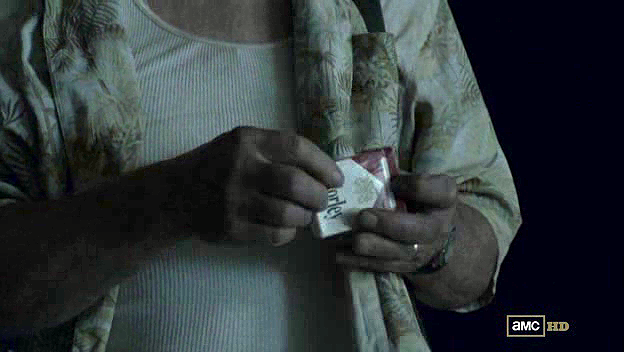
Putting aside the various shared worlds in film and television, like The Wilhelm Scream, The Tommy Westphall Universe and our very own Angela Hypothesis, there are many ‘fake brands’ used in shows. One I will highlight is Morley Cigarettes. They originated in the film Psycho. Here is what Wikipedia.org has to say.
“Morley is a fictional brand of cigarette that has appeared in various television shows, films, and video games that otherwise have no connection to each other. The iconic, fictional brand packaging resembles the original packaging of the Marlboro cigarette brand. The name “Morley” is a play on “Marleys”, a nickname for Marlboro cigarettes. Morleys appear at least as far back as 1960, in Alfred Hitchcock’s film Psycho. There is also a Morley Lights version, in a gold and white package (similar to Marlboro Lights), marked “Lights”.
The Morley packaging is sold to production companies by The Earl Hays Press, a century-old Hollywood prop packaging service. Morleys have appeared primarily in TV shows, and at times in movies, music videos, and other media, as both a prop and a plot element. Here is an alpohabetical list:
In Film:
200 Cigarettes (1999): In this comedy, Lucy, played by Courtney Love, presents a block of Morley cigarettes to Kevin, played by Paul Rudd.
Brooklyn Rules (2007): The three boys find a dead body in a convertible around the five-minute mark; one of the boys steals a pack of Morley off the dash of the vehicle.
Definitely, Maybe (2008): In 1992, Will Hayes, played by Ryan Reynolds, buys Morleys when he arrives in New York City for $3.20, and he complains that in Wisconsin they cost $2.60.
Epicenter (2000): At the beginning of the movie, the character Nick Constantine has a pack of Morleys in his briefcase.
Freddy Got Fingered (2001): Gord, played by Tom Green, can be seen smoking a pack of Morleys in one scene.[specify]
Gun Shy (2000): In a meeting between the police, the character Charley has a box of Morley cigarettes in front of him on the conference table.
Heist (2015) Robert De Niro pulls a pack of “Morley Lights” out of pocket of dead man at the end of the film.
The House on Greenapple Road (1970): A character steals a pack of Morley cigarettes from a desk at the police station.
Ingrid Goes West (2017): A pack of Morley cigarettes is on a table during a party scene.
Joy Ride 2: Dead Ahead (2008): Rusty Nail, played by Mark Gibbon, buys Morley cigarettes in the opening scene in the shop, which he then smokes.
Murderer’s Row (1966): Matt Helm uses a dart in a cigarette to take down a guard. He leaves the now empty pack of Morley cigarettes on the guard, showing the warning about smoking possibly being dangerous to your health.
Murder in the First (1995): Defense Attorney James Stamphill appears smoking Morleys while lying down and speaking into a primitive tape recorder, dictating notes about the case. The pack of Morleys shown is an old-fashioned design (based on the 1930s setting of the movie), unlike the modern-looking packs of Morleys more frequently seen.
Platoon (1986): Morleys are smoked by American soldiers.
Prozac Nation (2001): The character played by Christina Ricci smokes Morley cigarettes in the film version of Elizabeth Wurtzel’s autobiographical Prozac Nation. Ricci plays a young writer who occasionally uses the empty cigarette packs as scrap paper.
Psycho (1960): At the end of the film, psychiatrist Dr. Fred Richman, played by Simon Oakland, tells the story of what really happened and shakes a cigarette out of a pack of Morleys. This film was released June 16, 1960 and is currently the earliest known sighting of the Morley brand.
S. Darko (2009): The boy carries a Morley pack in his left sleeve.
Spy Game (2001): Robert Redford’s character sets down a pack of Morleys on the desk of the CIA director
The Tenants (2005)
Thirteen (2003): When Melanie confronts Tracy about the numerous drugs she found in her room, a pack of Morleys can be seen in the pile she throws on the table.[example needed]
The Traveler (2010): Deputy Jack Hawkins, played by John Cassini, takes a pack of Morley cigarettes from the counter prior to exiting the police station to have a smoke.
Transpecos (2016): Benjamin Davis (Johnny Simmons) and Lance Flores (Gabriel Luna) find a half-smoked cigarette and an open pack of Morleys while searching for the cartel members.
The World’s End (2013): Gary smokes Morleys throughout the film, best seen after the fight scene against the twins.
On Television:
24 “Day 8: 9:00 p.m. – 10:00 p.m.” (25 Jan 2010): Jack Bauer poses as a German buyer and smokes a Morley Light cigarette.
American Horror Story “Birth” (14 Dec 2011): Violet, played by Taissa Farmiga, is seen with a pack of Morley Lights at the kitchen table.
The Americans “Pilot” (30 Jan 2013): A background extra is smoking a Morley regular red pack cigarette.
Bagboy (2016): Packs of Morley can be seen on the shelves as Steve talks to Dog.
Becker “Santa on Ice” (13 Dec 1999): Becker smokes a Light Morley cigarette.
Breaking Bad: Morleys are smoked in the final season by several characters.
Beverly Hills, 90210 “The Back Story” (16 Sep 1992): Brenda Walsh returns from Paris with a smoking habit. Her parents find out when a pack of Morleys falls out of her purse.
Buffy the Vampire Slayer “School Hard” (29 Sep 1997): Spike, played by James Marsters, smokes Morley cigarettes.
Burn Notice “Scatter Point” (7 Aug 2008): The main character Michael is seen scattering cigarette butts outside a rooftop door and putting an empty pack of Morleys in the rooftop doorjamb.
“Fearless Leader” (25 Jun 2009): He bums a pack of Morleys.
“Blind Spot” (19 Aug 2010): Maddie is seen throwing a carton of Morleys into a suitcase as she packs for a trip.
“Square One” (21 Jul 2011): Jesse and Fiona are posing as crooked cops and extort, along with the security tapes, a carton of Morleys from a bodega.
“Reckoning” (12 Sep 2013): Maddie smokes her final Morley before James Kendrick’s men burst into the house she and Jesse were hiding in, before she blows herself and them up.
Californication: Hank, played by David Duchovny, often smokes Morley cigarettes and can be plainly seen in many episodes. This is an inside joke that harkens back to Duchovny’s days on The X-Files in which the Cigarette Smoking Man usually chain-smoked this brand.[citation needed] “The Raw & the Cooked” (19 Oct 2008): A pack is on a patio table near the end of the episode.
“Waiting for the Miracle” (29 Jan 2012): At the beginning, a pack is near his smartphone.
Cold Case “The Plan” (2 May 2004): Jerry smokes Morleys, and a pack is seen during an interrogation scene when Detective Nick Vera removes a cigarette from Jerry’s hand that has burned down to his fingers.
“The Sleepover” (7 Nov 2004): Tiffany smokes Morleys (light brown pack instead of the traditional red) when questioned by Detective Valens.
Criminal Minds “North Mammon” (1 Nov 2006): DNA found on Morley cigarette butts leads the FBI team to suspect a soccer coach, who smokes Morleys, of stalking one of his star female players. The pack of cigarettes the coach holds is actually a Marlboro pack and not a fictional Morley pack.
CSI: NY “Boo” (31 Oct 2007): A smoked Morley cigarette is found in a voodoo doll at a crime scene.
The Dick Van Dyke Show “Sally Is a Girl” (19 Dec 1961): Pickles brings Richie a box of Morley chocolate cigarettes.
ER “Beyond Repair” (10 Jan 2002): While searching his daughter Rachel’s room, Dr. Mark Green, played by Anthony Edwards, discovers a pack of Morleys with a condom inside.
Everybody Hates Chris “Everybody Hates Playboy” (27 Apr 2006): A carton of Morleys is sold out of the back of a car.
Frasier “Morning Becomes Entertainment” (6 Apr 2000): Bebe pulls a pack of Morleys out of her purse and asks Frasier if he minds.
Friends “The One Where Rachel Smokes” (8 Apr 1999): Chandler can be seen holding a pack of these.
Heroes “One of Us, One of Them” (29 Sep 2008): Claire Bennet’s biological mother, Meredith, tries to light a Morley in the Bennet home before Sandra Bennet asks her not to smoke in the house.
Jake 2.0: A terrorist disguises powerful explosives as a pack of Morley cigarettes and demonstrates its incredible power by exploding a piece of swamp in the Philippines.
Judging Amy “Can They Do That With Vegetables?” (5 Feb 2002): A teenage boy sues the Morley company for causing his emphysema.
Justified “Riverbrook” (23 Mar 2010): A group of prison escapees rob a convenience store. One discharges a shotgun in the store, blasting a rack of cartons of Morley cigarettes.
Killer Instinct “Game Over” (11 Nov 2005): Morley cigarettes appear in the desk of Lt. Matt Cavanaugh, played by Chi McBride.
Kingdom “Please Refrain from Crying” (12 Nov 2014): Lisa Prince, played by Kiele Sanchez, is seen holding a pack of Morley cigarettes outside a roadside dinner where she and Ryan Wheeler, played by Matt Lauria, stop at after visiting his parents.
Lost “LA X” (2 Feb 2010): In the Flash Sideways, Rose Nadler is seen on the plane clutching a magazine with an ad for Morley cigarettes.
The L Word “Lap Dance” (27 Feb 2005): Bette and Shane are seen smoking from a pack of Morley cigarettes whilst sitting on Bette’s porch.
“Lunar Cycle” (16 Mar 2008): A pack of Morley cigarettes is visible on the coffee table when Shane and Jenny are lying on the sofa together.
Malcolm in the Middle: “Stock Car Races” (2 Apr 2000): A pack of Morley cigarettes is one of the things found hidden by Lois. “Future Malcolm” (4 May 2003): Malcolm plays chess with Leonard, played by Jason Alexander. Leonard tries to pay off his debts with a pack of Morleys.
Mannix “All Around the Money Tree” (22 Feb 1969): Joe Mannix opens a suitcase to discover a couple packs of Morleys—in white packs.
Medium: “To Have and to Hold” (21 Jan 2008): A character smokes a Morley cigarette.
“The First Bite is the Deepest” (18 May 2009): Allison DuBois brings Cynthia Keener a bag filled with snack foods, candy, and Morley cigarettes when visiting her in prison.
The Middle “The Map” (11 Jan 2012): Frances brings Aunt Edie a carton of Morley cigarettes.
Millennium “The Time Is Now” (15 May 1998): Peter Watts discovers a Morley stub in the mysterious Millennium Group’s basement as a nod to the Cigarette Smoking Man from The X-Files. Chris Carter created both series.
Mission: Impossible: “Operation ‘Heart'” (22 Oct 1967): Barbara Bain’s character can be seen removing a pack from a table along with a handkerchief. Morleys appear in the original television series, and several characters can be seen with them.
Naked City “Tombstone for a Derelict” (5 Apr 1961): Four young men led by Baldwin Larne, played by Robert Redford, surround a derelict on a lonely street. Larne offers him a cigarette, and, as the derelict turns to get a light from one of Larne’s companions, Larne stabs the derelict in the back, dead, and tosses the cigarette pack on the body. Detective Flint, played by Paul Burke, and company arrive on the scene of the crime to investigate, and the pack of cigarettes is shown close up to be the Morley brand, a clue. This early Morley cigarettes black-and-white appearances shows a cigarette pack with an Etruscan horse image as the brand icon, and the first and last letters of “Morley” in lower case, and the letters in between in upper case.
Nash Bridges “Power Play” (16 Apr 1999): Morleys appear on a desk in a criminal’s house.
NCIS (TV series) s11e15 Bulletproof (25 Feb 2015): Smoked by Fay Gussman (Challen Cates) outside of Camper.
New Amsterdam “Love Hurts” (14 Apr 2008): A suspect in an interrogation room is about to light a Morley. John Amsterdam takes it from him and says, “No smoking.”
Orange Is the New Black “Tall Men with Feelings” (11 Jul 2013): Pornstache pulls a Morleys from his pocket and tries to light the butt.
The Outer Limits “Falling Star” (30 Jun 1995): Terry McCammon, while possessed by a time traveler, tosses a pack of Morleys onto a bedstand.
“A New Life” (30 Mar 2001): Jacob tries to smuggle two cartons of Morleys onto the bus.
Prison Break “Bolshoi Booze” (11 Nov 2006): T-Bag picks up a pack of Morleys from a bag in Geary’s apartment.
Pushing Daisies “Bad Habits” (15 Oct 2008): A carton of Morleys can be seen in the cabinet full of contraband in Sister Maria Christina’s room.
Reaper “The Devil and Sam Oliver” (26 May 2009): Mary Pat, the greeter at the Work Bench, holds up a pack of Morleys before she steps outside to have a smoke next to the LP gas tanks.
Saving Grace “It’s a Fierce, White-Hot, Mighty Love” (4 Aug 2008): the main character, Grace, is given a Morley by a suspect as she’s investigating him.
Shameless: “I’ll Light a Candle for You Every Day” (22 Jan 2012): Fiona throws Lip a carton of Morleys. “Lazarus” (6 Apr 2014): Lip smoked Morleys after he wakes up as does Mickey Milkovich. “Milk of the Gods” (11 Jan 2015): Lip smoked Morleys again in the final minutes of the episode.
Seinfeld “The Invitations” (16 May 1996): George Costanza smokes a Morley in an attempt to appear off-putting to his fiancee, Susan Ross, in hopes that she will call off their upcoming wedding.
Sordid Lives: The Series “Pills, Poison and Penises” (6 Aug 208): Morley brand cigarettes are advertised on a sign at the convenience store where Vera works.
Space: Above and Beyond “Ray Butts” (22 Oct 1995): The main character, Ray Butts, has a pack of Morleys at the beginning of the episode.
Special Unit 2 “The Grain” (3 Oct 2001): A housewife, under the influence of the Sandman, robs a convenience store, demanding all the cash and a pack of Morleys.
The Strain “The Third Rail” (21 Sep 2014): Mariela Martinez throws down an empty pack of Morley Lights. Later, Zach Goodweather finds Morleys (in green-and-white packaging) on the floor of a looted grocery store, and picks up two packs for Mariela.
That ’70s Show “Eric Gets Suspended” (30 Nov 1999): Red Forman orders his son Eric to smoke an entire pack of Morleys after he gets caught with a cigarette at school.
The Twilight Zone: “Static” (10 March 1961): The radio plays Morley cigarette ads at various times throughout the episode.
“The Thirty-Fathom Grave” (10 Jan 1963): Bill Bixby is sitting at a table smoking, and a pack of Morleys can be seen sitting on the table about halfway through the episode.
“In Praise of Pip” (27 Sep 1963): Jack Klugman is seen crushing an empty Morleys pack during the first few minutes.
“Nightmare at 20,000 Feet” (11 Oct 1963): William Shatner pulls out a pack of Morleys and almost lights one until his wife (Christine White) points out the “NO SMOKING” sign illuminated on the plane.
“Living Doll” (1 Nov 1963): Telly Savalas removes a pack of Morleys from his shirt pocket 17 minutes in.
“Stopover in a Quiet Town” (24 Apr 1964): In front of the church, he offers his wife a cigarette 13 minutes in.[specify]
Twin Peaks: The Return (4 June 2017): A customer at the Roadhouse hands a pack of Morleys filled with cash to a Twin Peaks police officer.
Up All Night “I Can’t Quit You” (6 Dec 2012): Chris struggles to resist buying a pack of cigarettes at a convenience store, where Morleys are visible behind the counter.
United States of Tara pilot (18 Jan 2009): Tara has pack of Morleys in the glove box after speeding away from school.
The Walking Dead: “Save the Last One” (30 Oct 2011): Dale contemplates smoking a cigarette while standing on the roof of his RV. “Consumed” (16 Nov 2014): Daryl finds a carton of Morley Lights soft packs on the floor next to Noah, who is trapped under a bookshelf. “JSS” (18 Oct 2015): Carol finds a green and white pack of menthol flavored Morleys near a deceased community member, who she had previously called out for smoking, and picks it up as if to smoke one, but does not. It is the first menthol flavored Morleys to appear on television. Daryl smokes Morley cigarettes, along with other group members, Merle Dixon and Abraham Ford.
Warehouse 13 “The Ones You Love” (24 Sep 2012): Mrs. Frederic and Steve Jinks enter The Library, a secret room in the Vatican. There is a pack of Morley cigarettes on the table.
Weeds “The Brick Dance” (27 Aug 2007): Conrad asks Heylia about the Morleys that she is smoking, that she had not smoked for years.
The X-Files (16 Apr 2000): The Cigarette Smoking Man, played by William B. Davis, smokes this fictional brand, as does Agent Monica Reyes. The X-Files is probably the most well known use of Morley cigarettes. On the season seven episode “Brand X”, Agents Mulder and Scully visit Morley Tobacco’s headquarters after one of the employees is murdered; the company is described as a multi-billion dollar global corporation.
In Literature:
In Andrés Spinova’s novel Marilyn y un par de Ases (Marilyn and a Pair of Aces) the character Mauser smokes Morley cigarettes when he’s about to make a hit.
In The Darwin Vampires, a 2010 poetry collection by Patrick Chapman, the speaker in one of the poems smokes a Morley cigarette.
Sherbet (American comic book): In the short story “Milk,” the eponymous detective, Sherbet Lock, reveals that both she and the missing child Belinda Darwin favor Morley cigarettes.
In Video games:
Gone Home: A pack can be found on the top shelf of Sam’s locker.
System Shock 2: Packs of Morley cigarettes are an item within the game; when smoked, they cause the player character to lose health.
Other media:
“Because I Got High (Positive Remix)” by Afroman: In this music video, a man sitting on a motorized couch is seen smoking and holding a pack of Morleys before he smokes a joint, throws the cigarette behind him, and drops the pack because he got high.
Broken Saints: The character Raimi buys a pack of Morley cigarettes in this online cartoon. William B. Davis of The X-Files is a member of the voice cast, but Brooke Burgess, creator of Broken Saints, confirmed that the Morley cigarettes were in the original series “WELL before Bill signed on — but he liked the nod, none-the-less.”
A pack of Morley cigarettes is featured on the cover of 2015’s Cream Wave, an album by Pleasure Gap.”
As you can see it has been used in a vast amount of things. A very interesting thing is that if you consider the Westphall Universe, nearly EVERY TV SHOW EV EVER can be linked and perhaps takes place in the same universe. Consider my Mind blown!
Twin Peaks Season 3 – Episodes 1 to 4: A Brief Review

Will contain spoilers for Twin Peaks Season 3 Eps 1-4 and 8!
Well, it has taken my breath away. I am glad I got some spoilers along the way to prepare me for the very different Twin Peaks Season 3.
It is even more way out than Fire Walk With Me. I was worried that it may not live up to my expectations but after having a 4 hour binge last night of episodes 1-4, all I can say is astonishing. It really is very dark, terror inducing, (apart from a couple of CGI flaws) visually st…unning and utterly unmissable.
Lights were out to get the best effect and volume was turned up loud. The soundtrack (little use of Angelo at this point) is one of the characters too and boy did it enhance the effect. I actually jumped from the sofa on a few occasions.
A few moving points for me were the very close to dying in real life at the point, Catherine Coulsen – playing The Log Lady – playing, pretty much a dying Catherine and that moment of Cole and Rosenfield in the Blue Rose scene. But when Bobby saw Laura’s photo on the table and broke town in tears remembering 25 years ago, I broke my heart. Strange really, It took me back to where I was and felt at that time. It was like Bobby was the viewer, mourning the loss/life of Laura back then and we felt it as a metaphor for our lives then and since.
I guess I will have another 4 hours/eps binge tonight. I NEED to get to what is quoted by most viewers as ‘One of the greatest episodes in TV history…’ – The Atomic Bomb/Twin Peaks origin episode.
There is so much I could write and say… I am truly moved.
3 Days to Go: Twin Peaks: 26 Years Later…
….and yes, finally, I get to see ‘Season 3’

I know my posts have been few and far between and most of been Peak-centric but this show has been part of my life. The original series was ground-breaking, it changed television. All things you know and love came after Twin Peaks., The X Files for example. Season 2 ended on a cliff hanger but somehow that was perfect. You only had your imagination to go continue the story. Then came the prequel, Fire Walk With Me, while a flop at the time, it is now classed as a cult classic. Fire, was dark, so very dark, as it portrayed Laura Palmer’s last seven days.
There was an aspect of the series and films which was Laura saying ‘I will see you again in 25 years’. Never in my wildest dreams did I ever think it would continue.. and here we are, after nit having Sky Atlantic and having to wait even more time until Mondays Season 3 release, finally in 3 days I will be able to see all 18 David Lynch directed episodes. After I have viewed, I plan to re-watch/read the whole Peak-verse.
The other day I found a great post online detailing the whole order to watch and read, while I already new this, I will share with you, in my next post, the very detailed post and place my own additions in italics. ‘The owls are NOT what they seem…”
Spotlight On… Scarlett Johansson

It’s a rare actress who can make the transition from child star to a regularly-working performer in Hollywood. Scarlett Johansson not only did it, she went on to become one of the most bankable box office stars in the world. Johansson has been a professional actress for over two decades… and she’s only 31. Scary as it may seem, Johansson may not even be at her peak yet.
Even before Johansson joined the Marvel Cinematic Universe, she was well known for her roles in acclaimed dramas and comedies, with an occasional film. But now that Johansson has appeared four times as Black Widow, moviegoers have followed her to other movies, including Lucy. There is a very real demand for Marvel Studios to finally make a Black Widow solo film, but before that will (hopefully) happen, Johansson is headlining the live-action adaptation of Ghost in the Shell.
Next month, Johansson will be reprising her role as Black Widow for the fifth time in Captain America: Civil War, as she sides with Iron Man over Captain America. The early word is that Civil War is going to be superhero showdown to remember. ComingSoon.net is looking back at ten of Johansson’s most memorable film roles.
Ghost World was Johansson’s tenth feature film, and her first comic book movie, but definitely not her last comic book experience. In this film, Johansson played Rebecca, a teenage girl who was the best friend of Thora Birch’s Enid. Ghost World was adapted from Daniel Clowes’ comic of the same name, which chronicled the way that the two girls drifted apart before Enid made a major life choice. This was kind of a downer of a movie, but it won critical acclaim. While Birch had top billing in this film, it was Johansson who went on to superstardom.
Lost in Translation is still one of Johansson’s most enduring films even 13 years after its release. Johansson played Charlotte, a young married woman who befriended Bill Murray’s Bob during their extended stay in Tokyo. The connection between Charlotte and Bob defied labels without going in a conventional direction. The final exchange between their characters is still the subject of speculation among film lovers. While Murray was nominated for Best Actor at the 2004 Oscars and the film itself was also nominated for Best Picture, Johansson was snubbed by the Academy.
Johansson’s next role placed her as the title character in Girl with a Pearl Earring, a period drama about the creation of Johannes Vermeer’s famous painting. Tracy Chevalier wrote the novel that was inspired by Vermeer’s work, with Colin Firth portraying Vermeer and Johansson playing Griet, a servant in his household. Between Lost and Translation and Girl with a Pearl Earring, Johansson successfully made the transition from teen star to more mature roles in Hollywood.
The grisly murder of the real life Black Dahlia, Elizabeth Short, gave her a fame in death that she never achieved in her life. In 2006, director Brian De Palma adapted James Ellroy’s novel about the Black Dahlia murder, with Johansson as Kay Lake, a woman caught between two of the case’s police investigators: Bucky (Josh Hartnett) and Lee (Aaron Eckhart). Mia Kirshner played Elizabeth Short. Despite critical praise for Kirshner’s performance, The Black Dahlia was a box office disappointment.
Do you remember the time that Batman and Wolverine faced off over Black Widow’s affections? That never happened, but Christopher Nolan’s The Prestige did bring Christian Bale and Hugh Jackman together as rival magicians in the 19th century. Johansson played Olivia, the assistant to Jackman’s Robert Angier, who later joined Bale’s Alfred Borden. Ten years later, The Prestige is still one of Nolan’s best loved films.
Johansson headlined another period drama two years later in The Other Boleyn Girl. Johansson played Mary Boleyn opposite Natalie Portman’s Anne Boleyn during the reign of King Henry VIII (Eric Bana). In this movie, the rivalry between the two sisters nearly destroyed the Boleyn family. The Other Boleyn Girl also had an embarrassment of riches with its cast of future movie stars, including Benedict Cumberbatch, Andrew Garfield, Eddie Redmayne, and Juno Temple.
While Johansson originated the role of Black Widow in Jon Favreau‘s Iron Man 2, it was Joss Whedon’s The Avengers movie that finally gave Johansson’s character the spotlight that popularized Black Widow with a new generation of comic book movie fans. Black Widow was one of the few featured female characters in the movie, but she also had several of the film’s signature scenes, including her first appearance in the story as Black Widow proceeded to beat up some Russian criminals while she was tied to their chair. We’re still waiting for that Black Widow solo movie, Marvel!
Under the Skin is one of Johansson’s most divisive films, in large part because the movie refuses to explain itself for anyone who isn’t paying attention. Johansson played an alien wearing a human skin who uses her body to trap men and steal their skins for more of her kind. After Johansson’s alien seemingly feels pity for one of her victims, she goes on the run from the rest of her race. This film was far from conventional, and it didn’t suddenly become an action film when the alien tried to escape. In the end, she couldn’t outrun what she really was. It was kind of depressing, actually. But the Jonathan Glazer film won high critical praise for Johansson’s performance.
While Johansson also co-starred in Iron Man 2, Captain America: The Winter Soldier treated her Black Widow like a true co-lead with Chris Evans’ Captain America as they went up against S.H.I.E.L.D. and the dark secrets that were hidden within. The Winter Soldier was also one of the most successful non-Avengers or Iron Man film in Marvel Studios’ eight year history. Seriously though, we’re really overdue for a Black Widow solo film.
Lucy is the proof that Johansson can carry an action movie by herself. During the early part of the movie, Johansson’s Lucy gains incredible psychokinetic abilities after being overdosed with a drug… and she only gets more powerful from there. Lucy also becomes more frightening as her humanity slowly disappears. This film was one of the unexpected box office smash hits from 2014, and it even beat The Rock’s Hercules movie on its opening weekend! Because of that, Lucy could be the movie that finally established Johansson as a true action star.
This is a piece from 2014 from the website comingsoon.net. Used with thanks.


